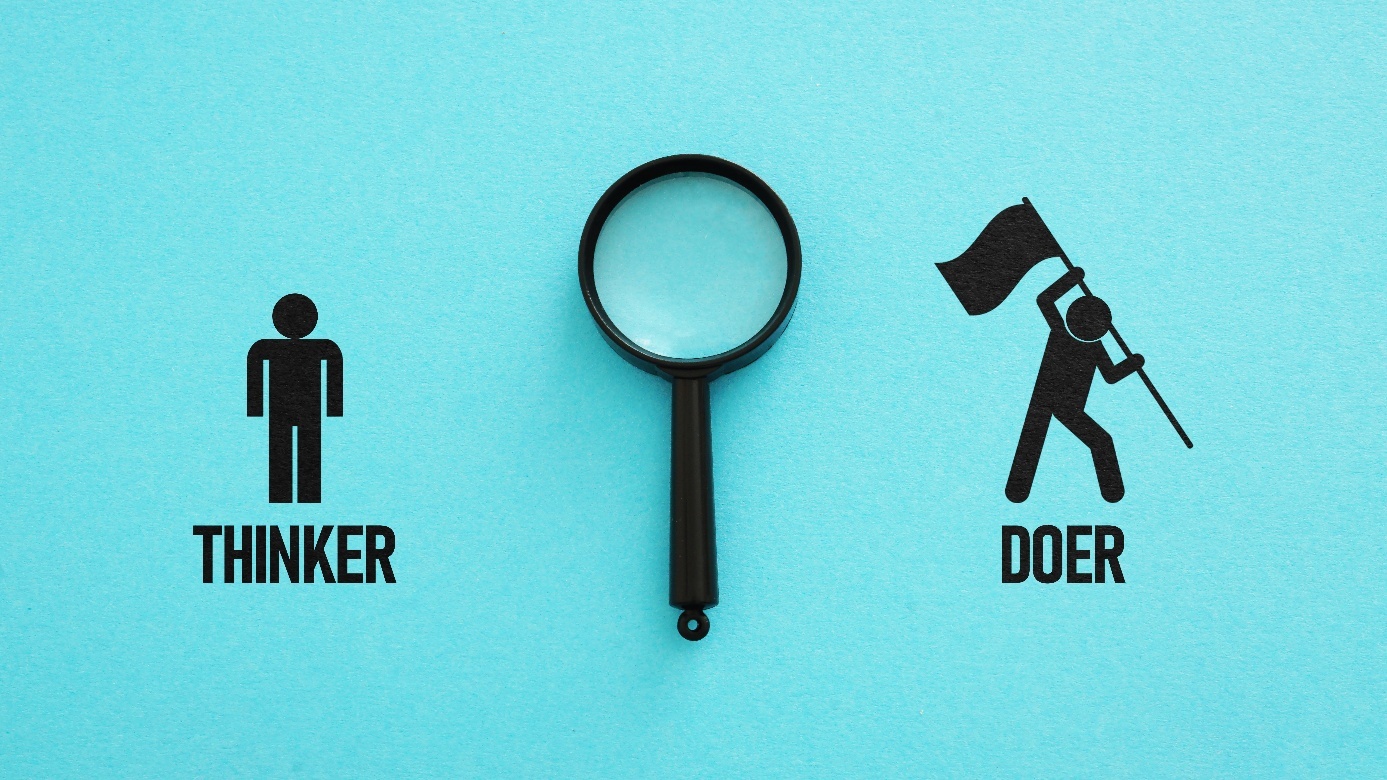
If you are a good supply chain leader, you havetaken care to develop your teams with a mix of talents.
A hectic daily routine
The core business of your teams is undoubtedly to meet demand, deliver to customers on time, and make the best possible use of the company's resources. As a result, you probably have many action-oriented operational staff in your teams. Their daily routine involves making quick decisions, solving problems, and interacting with customers, suppliers, production, and service providers to ensure the best possible service.
It's fast-paced, exciting, but very focused on the short term.
Even if your teams love this daily adrenaline rush, each of its members certainly also has a relevant perspective on how things could be improved. But you still need to give them the time and opportunities to put these ideas into practice.
In my career as a supply chain manager, I have always tried to ensure that the key players in the teams I have led have a project component alongside their operational responsibilities. This is not always easy to arrange in a corporate environment where everyone has to fit into a clearly defined box. If you are a demand planner, you are not a supply planner, let alone a transformation project manager—everyone has their place...
If you want to launch a significant transformation, you will undoubtedly assign an experienced project manager to it, probably accompanied by one or more external consultants.
Too bad for your day-to-day players, your "doers"; they will remain in their operational roles—we will still ask for their opinion—and have them express their "irritants"—but they will not be the architects of the transformation.
Consultants as catalysts
Bringing in external consultants for a transformation project is often essential. Especially if they have strong practical experience and haven't learned about the business world through Gemini or ChatGPT...
They can act as catalysts. They have been exposed to many other companies and are familiar with methods and tools that your team has not yet been exposed to. They facilitate managerial decisions to undertake a transformation. It may be regrettable, but it is easier to convince management with opinions from outside the company.
However, it is not the consultants who will carry out the transformation, who will actually manage the change, and who will achieve the results.
That responsibility lies with your team; you cannot outsource it. Results will only be achieved if your managers and day-to-day staff embrace the new processes and tools. Don't ask outsiders to manage change; ask your teams to drive change!
Your "doers" are also thinkers.
Industry practitioners have been experiencing this for decades through continuous improvement initiatives:
• There is more intelligence in the minds of several people than in one,
• The reality of problems, their root causes, and opportunities for improvement are
better known on the ground—by production operators, for example—than by management.
It is therefore in your best interest to rely on your day-to-day employees when implementing change.
How to do this in practice is up to you in the context of your company, but here are a few recommendations:
• Rather than hiring an external project manager, can you replace one of your key players in their operational role and give them the opportunity to be a project manager?
• Train, train, train your teams to expose them to other practices and open their minds.
• Give them “idle” time and challenges—through improvement initiatives, performance monitoring, and mini-projects. Does it cost money? Maybe a little, but much less than external consultants, and it can pay off big time!
• Ensure that they are deeply involved from the outset in the design of the new processes and systems! Be careful, this is not simply a matter of involving them in a UAT (User Acceptance Test). You don't want them to simply "accept"—under duress—something that has been designed in isolation, but rather to validate the new operating methods because they have been involved in their design and in the decisions that have been made.
The adaptive team
Adaptability is the key characteristic of the 21st-century company. In a rapidly changing environment, adapting is a matter of survival. If you transform your "doers" into agents of change, you embed this dynamic of transformation and adaptation in the DNA of your teams.
Your initial project may take a little longer than if it were carried out at breakneck speed by an external task force, but the momentum will be sustained and the risks of failure or backtracking will be reduced!